



THANK YOU FOR SUBSCRIBING


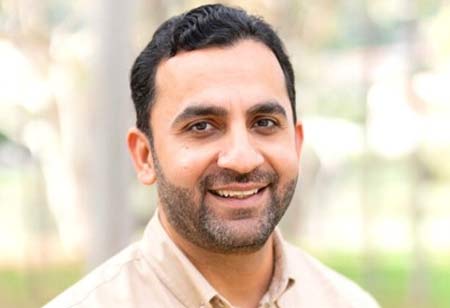
 Rob Beachy, Chief Information Officer, Sturgis Bank
Rob Beachy, CIO of Sturgis Bank, rose from military IT beginnings to executive leadership. He operationalizes the bank’s identity as a “technology company that does banking,” driving efficiency, innovation, AI governance and customer focused community banking.
Future Proofing Community Banking
My path to becoming Chief Information Officer at Sturgis Bank is anything but conventional. My first real encounter with technology came at my final military duty station, where a sergeant major handed me a stack of manuals and told me to figure it out. From those early Windows 3.11 days, I taught myself networking through persistence, curiosity and asking the right questions. That military ethos of resourcefulness and missionfirst thinking became the foundation of a career spanning more than two decades in banking technology.
After leaving the service, I moved into consulting, where I worked across legal, medical and manufacturing environments and learned how businesses operate, not just how their systems run.
When Sturgis Bank, already one of my consulting clients, offered me a role, I started as an IT coordinator who could not even place an order without permission. Twenty years and 58 efficiency projects later, I sit at the executive table alongside CEO Jason Hyska, helping shape the bank’s strategy, competitive positioning and growth. That seat reflects a deliberate institutional choice. Sturgis Bank defines itself not as a financial institution that uses technology, but as a technology company that does banking and I am responsible for making that identity operational.
Just as important, we are a community bank. That means knowing a customer by name, not account number, staying deeply embedded in the towns we serve and building relationships that large institutions often cannot replicate at scale. Technology at Sturgis Bank is not meant to distance us from that model, but to protect and strengthen it.
The CIO Who Still Answers Calls
Under my direction, Sturgis Bank has increasingly explored internal capability development and API-driven integrations, replacing some costly external platforms with targeted data access at a fraction of the cost. Automation decisions, AI governance and product roadmap investments all flow through the same filter of what gets better for the customer, the employee, the bank’s cost structure and its risk profile? Those decisions are shaped by stakeholders across the organization.
I chair the bank’s AI workgroup, setting governance standards that keep a human in the loop on every deployment. Robotic Process Automation agents complete overnight tasks. AI-powered document summarization tools accelerate decision-making. An interest recalculation tool reduced a two-hour manual process to five seconds. Across approximately 58 distinct efficiency projects over three years, these initiatives have saved roughly 750 hours of employee time per month, the equivalent of nearly four full-time positions.
To me, those reclaimed hours are not just cost savings. They give colleagues more time for meaningful customer conversations. Every technology investment must answer one question- does it improve customer service? Mobile deposit does not replace a relationship, it respects a customer’s Saturday evening. Automation does not eliminate jobs, it frees professionals to do meaningful work. That balance extends to cybersecurity, where my mandate is to protect without slowing innovation, keeping security an enabler of speed rather than a blocker.
The Business Fluent Technologist
My most powerful insight and the one I return to with striking honesty, is that technical excellence alone will never earn a CIO a seat at the strategic table. Technology leaders must stop being the computer guy and start speaking in terms the business understands efficiency ratios, return on investment, return on assets and the tangible impact of process improvement on headcount and margin. Without that translation, even the most capable IT leader risks being seen as an expense line rather than a business driver.
I am transparent about my own growth in this area. I recount a candid conversation with my executive peers that forced me to confront the gap between my technical credibility and my business fluency. The bridge between IT and business had already been built, but I needed to deepen my understanding of business decisions so that both sides would trust it enough to cross.
“People follow leaders they trust and trust comes from authenticity.”
That vulnerability is central to my leadership identity. I speak openly about a failed AI presentation where my eagerness to deliver a polished product led me to shortcut the data layer, feeding two sources without clarifying which was the source of truth. The lesson was clear doing things the right way, even when it is the hard way, is non-negotiable.
My process discipline carries the same rigor. I run military-style after-action reviews on every major initiative, use agile methodology to deliver quick wins that build organizational trust and practice management by wandering, relying on informal hallway conversations and real-time feedback loops to surface friction early. When I identify a bottleneck between lending and underwriting, I map the process, remove friction points and prove the value in operation before formalizing the documentation.
Future Proofing Community Banking
I see a community banking landscape that will demand greater self-reliance and leaner operations. As large institutions pursue scale through mergers, community banks cannot hope to outspend them. Instead, I believe the future belongs to banks that build internal capabilities where it makes sense, use API-driven integrations selectively and invest in predictive analytics that enable proactive, not reactive, customer service.
I envision a world where a bank can identify a customer heading toward financial difficulty and reach out not with a collection call, but with a genuine offer to help. That is technology enabling exactly the kind of relationship banking that defines Sturgis Bank’s 120-year legacy.
At the core of everything is culture and presence. I answer customer calls, walk the floor and lead my IT team by finding great people and building around them. My advice to aspiring CIOs is characteristically grounded. Learn the business, fail publicly and learn from it and never take yourself too seriously. People follow leaders they trust and trust comes from authenticity.
As Sturgis Bank grows, I remain focused on building systems that empower people, mentoring future technology leaders and keeping innovation grounded in human connection.

Live Oak Bank [NYSE: LOB]
The Financial Advisor Retirement Wave

United Community Bank [NYSE: UCB]
Why Community Banks should focus on Data Rich Businesses for Future?

Nationwide Building Society [LON: NBS]
Artificial Intelligence - The Future Is Here?

Interactive Brokers LLC [NASDAQ: IBKR]
Why Compliance Professionals Must Embrace Disruption & Technology

Capital One [NYSE: COF]
Redefining the Payment Landscape with Innovative Strategies

Santander Bank [BME: SAN]
Strategies for Innovating in Digital Payments
Read Also




Banking CIO Outlook Weekly Brief
Be first to read the latest tech news, Industry Leader's Insights, and CIO interviews of medium and large enterprises exclusively from Banking CIO Outlook