
Banking CIO Outlook

Evaluating ATM Outsourcing Partners for Modern Financial Institutions

Evaluating ATM Outsourcing Partners for Modern Financial Institutions

ATM availability has become a reputational issue as much as a service issue for banks and credit unions. Cardholders rarely distinguish between a hardware malfunction, a software problem or a vendor dispute. They simply see an unavailable machine. Behind the scenes, many institutions still coordinate a patchwork of cash management providers, maintenance firms, telecommunications partners and software vendors. Every outage can trigger a chain of calls, conflicting diagnoses and avoidable service costs.


Evaluating Banking Software Platforms Built for Credit Oversight and Lending Administration

Evaluating Banking Software Platforms Built for Credit Oversight and Lending Administration

The most expensive inefficiencies in banking rarely originate from a lack of data. They emerge when information sits in disconnected systems, forcing lenders, credit administrators and review teams to reconstruct the same borrower story repeatedly. Loan files are examined for committee preparation, revisited for collateral analysis, reviewed again for portfolio monitoring and referenced once more for management reporting. Each handoff adds delay, increases documentation risk and absorbs skilled staff time that institutions can no longer afford to lose.

Rethinking Payment Systems: A Path to Operational Excellence

Rethinking Payment Systems: A Path to Operational Excellence

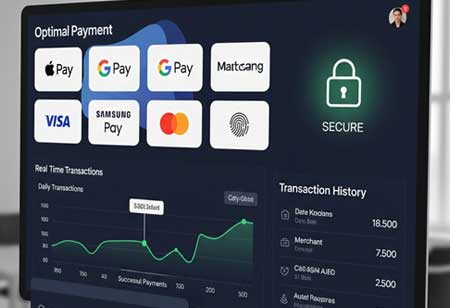
The financing exchange scenario has begun to experience drastic changes due to the demand for improved means of moving capital across borders and industries. Central to this transition is the recognition that conventional handling of transactions fails to satisfy the needs of an economy that has become increasingly digitized and operates incessantly. Payment processing in modern enterprises is no longer considered just an administrative function occupying the back office; it has assumed the mantle of a core strategic lever impacting customer satisfaction and operational liquidity.

Choosing an AI Digital Banking Platform for Sustainable Deposit Growth

Choosing an AI Digital Banking Platform for Sustainable Deposit Growth

Deposit gathering has become a board-level concern for many community banks. Loan portfolios may remain healthy, but deposit growth is becoming harder to generate through branch networks alone. Meanwhile, institutions with national digital reach are competing for the same customers, putting pressure on banks that still depend heavily on local market visibility and traditional marketing methods.

AI-Powered Financial Platforms: Advancing Real-Time Payment Intelligence

AI-Powered Financial Platforms: Advancing Real-Time Payment Intelligence

AI payment solutions are transforming the financial landscape by introducing intelligent, automated, and highly adaptive capabilities that enhance the speed, accuracy, and security of transactions. As digital payment ecosystems expand, organizations increasingly rely on AI-driven tools to streamline financial operations, reduce operational friction, and strengthen transaction reliability across diverse platforms.

Cloud Lending that Keeps Credit Moving

Cloud Lending that Keeps Credit Moving

Credit institutions are being forced to modernize lending while protecting margin, compliance discipline and borrower trust. The old tradeoff between speed and control has become harder to defend: customers expect digital entry points, regulators expect traceable governance and lenders still need enough flexibility to launch products, adjust risk logic and serve multiple channels without rebuilding the core stack. A cloud lending and leasing solution must therefore do more than digitize forms. It must help executives manage the full credit journey as one connected business process.

Shaping Modern Commerce Through Secure Electronic Payment Systems

Shaping Modern Commerce Through Secure Electronic Payment Systems

Electronic payment transaction solutions have become a cornerstone of modern commerce, transforming how money moves across industries and geographies. By bridging traditional financial systems with digital innovations, these solutions offer faster, more secure, and more accessible methods of exchanging value. They are only redefining convenience for consumers and also empowering businesses to streamline operations, reduce costs, and expand their market reach. As technology, regulation, and consumer behavior converge, electronic payment solutions continue to shape the evolution of global trade and financial inclusion.

Bank Machine Security that Stops Breach Escalation

Bank Machine Security that Stops Breach Escalation

ATM security decisions now sit at the intersection of branch risk, cash availability, insurance exposure and public safety. Physical attacks on bank machines have become more destructive because criminals increasingly target the cash compartment through force, gas or solid explosives. Reactive measures can reduce the value of stolen notes, yet they often leave institutions managing damaged equipment, disrupted branch access, repair logistics and reputational unease. Executives evaluating bank machine security systems need solutions that limit the attacker’s path before the vault area becomes reachable.

Cloud Lending's Role in Modernizing Europe's Financial Landscape

Cloud Lending's Role in Modernizing Europe's Financial Landscape

The European financial landscape is rapidly embracing digital transformation, and cloud lending solutions have emerged as a cornerstone technology driving innovation in the credit and loan management sector. As financial institutions face rising customer expectations, stricter regulations, and intense competition, adopting cloud-based platforms offers an effective way to streamline lending processes, reduce costs, improve decision-making, and enhance customer experiences. The solutions allow banks, credit unions, and fintech companies to manage the entire loan lifecycle on secure, scalable platforms that integrate data analytics, automation, and AI.

The Shift toward Embedded Financial Infrastructure in Payment Solutions

The Shift toward Embedded Financial Infrastructure in Payment Solutions

Enterprise buyers evaluating modern payment solutions are no longer comparing interfaces or fee structures in isolation; the real decision sits deeper, within how effectively a provider integrates financial capability into the flow of business transactions. Payments have moved from being a discrete function to becoming a continuous layer that shapes liquidity, credit access and operational timing across an organization’s ecosystem. This shift is particularly visible in emerging markets, where businesses are less concerned with adopting digital banking tools and more focused on removing friction from existing commercial activity.

Advancing Bank Machine Security in European Financial Networks

Advancing Bank Machine Security in European Financial Networks

Bank machine security in Europe represents a critical pillar in the continent’s financial infrastructure, where trust, technology, and regulation converge. With millions of transactions occurring daily through automated systems, ensuring the safety of these interfaces has become an essential concern for financial institutions, regulatory bodies, and consumers alike. As bank machines extend beyond cash withdrawals to include various financial services, the security mechanisms behind them have had to evolve rapidly to match the growing sophistication of threats.

Building Intelligence Into Payment Compliance

Building Intelligence Into Payment Compliance

Payment executives face a widening gap between transaction velocity and regulatory scrutiny. Cross-border commerce, digital wallets and embedded finance models have accelerated customer acquisition, yet oversight frameworks remain fragmented across jurisdictions. Fraud schemes exploit that fragmentation, often bypassing rule-based controls through jurisdictional workarounds, proxy cards or manipulated onboarding data. Institutions that scale quickly without embedding compliance logic into their payment architecture risk fines, reputational damage and mounting chargebacks. An AI-driven payment solution must therefore do more than automate approvals. It must integrate regulatory awareness, transaction monitoring and risk analysis directly into the payment flow.

Payment Evolution: Shaping Europe's Economic Landscape

Payment Evolution: Shaping Europe's Economic Landscape

Across Europe, the evolution of payment solutions is transforming how value circulates through modern economies. This shift is shaped not by urgency, but by a calculated drive toward autonomy, efficiency, and interoperability. Behind the transition, regulators, financial infrastructure leaders, and technology providers are coordinating efforts that prioritise user experience, security, and sovereignty.